
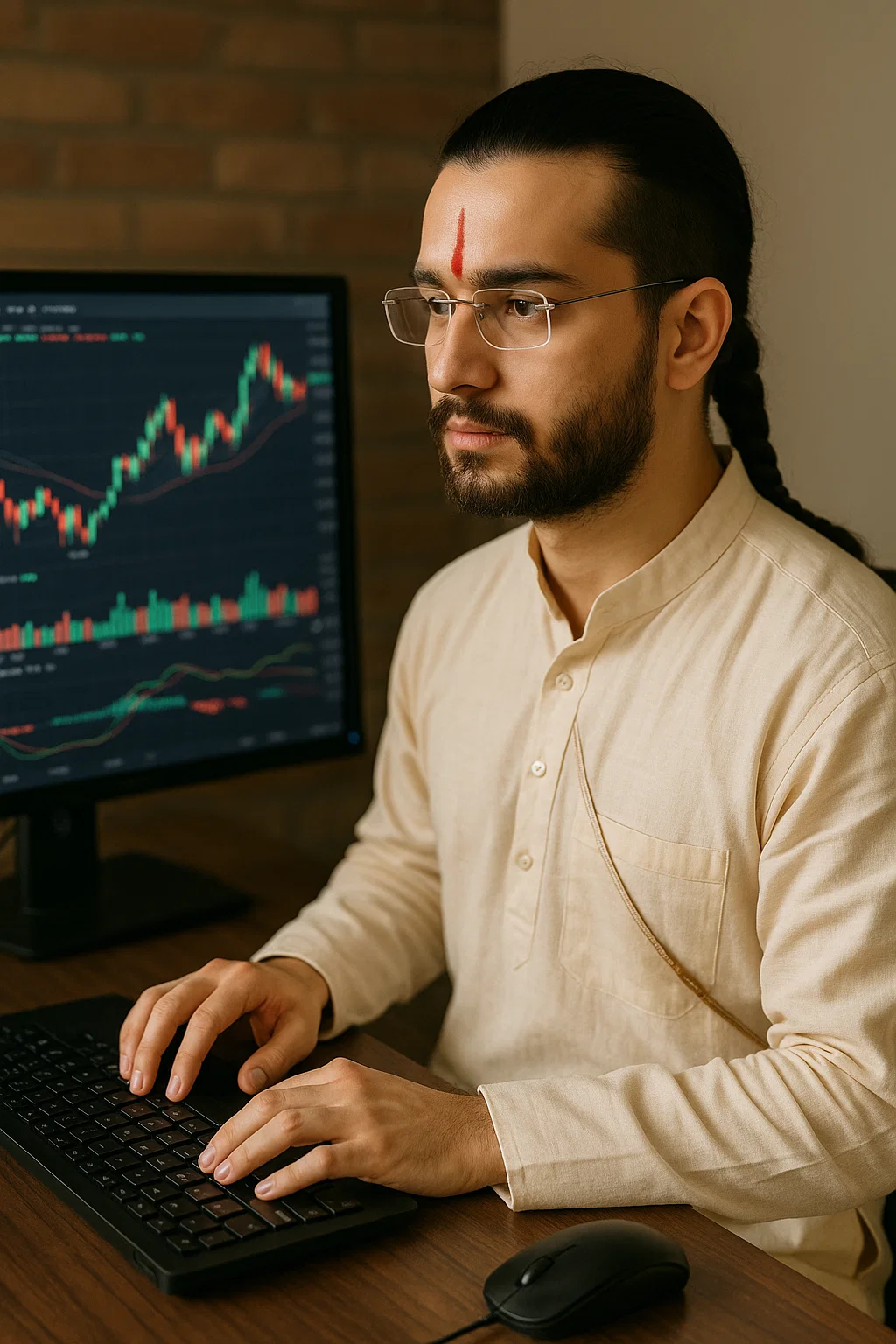
If you spend even a little time on social media right now, you’ll see a strange mix in your feed: bank Nifty charts, eclipse dates, and astrologers confidently calling the “next big crash”.
Welcome to the world where astro‑trading trends harder than balance sheets—especially in India.
As a founder of a virtual CFO services firm, I find this world fascinating, not because I want to trade with planets, but because it tells you something very deep about how Indian entrepreneurs and retail investors think about money, risk, and “shortcuts to wealth”.
And understanding that psychology is exactly where a good virtual CFO service provider earns their fee.
The eclipse, the crash, and the seduction of certainty
Recently, a lot of astrologers online have been saying that a particular solar eclipse date (like 17 February) could trigger a painful market crash. The logic is framed as:
“Major cosmic event → major global change → market collapse.”
Most people sharing these posts are:
- Not professional traders.
- Not reading annual reports or macro data.
- But they love the idea that a hidden pattern explains what happens in the markets.
Why?
Because markets feel chaotic.
Astrology feels structured.
Astro‑trading promises that if you learn this “hidden structure”, you can:
- Predict big moves.
- Avoid major losses.
- Catch the big rallies early.
That’s incredibly emotionally attractive—especially if you’re tired of feeling powerless in front of red and green candles.

Why astro‑trading sells so well in India
A founder of a large ed‑tech app once told me that their three best‑selling categories across India were:
- Futures & Options trading
- English speaking and communication
- Astrology
All three sell the same dream:
- “You can make more money.”
- “You don’t need a fancy degree.”
- “You can learn this at any age from your phone.”
Now combine:
- F&O (high leverage + fast results) and
- Astrology (deep cultural comfort + belief system)
…and you get astro‑trading—easily marketable, heavily viral, and perfectly tuned to the Indian psyche.
People don’t just want knowledge; they want hope wrapped in knowledge. That’s what they are paying for.
Where does a virtual CFO fit into this story?
If you run a business, you have two very different ways to handle money:
- The “astro‑trading” way: chase signals, tips, narratives, and “guru” calls—whether they’re based on planets, patterns, or WhatsApp forwards.
- The virtual CFO way: design a system around cash flows, risk, and data, so that no single prediction—about markets, clients, or eclipses—can blow you up.
A virtual CFO services provider is not in the business of telling you whether an eclipse will tank Nifty.
We are in the business of making sure that:
- Even if markets crash, your liquidity is protected.
- Your working capital is ring‑fenced from your personal gambling instincts.
- Your investment portfolio and business cash are not mixed in one emotional trading account.
- You have a risk framework that doesn’t depend on what anyone on YouTube said last night.
The real edge is not planetary; it’s process‑driven.
What most founders actually do with money (and why it’s risky)
Typical behaviours we see when we come in as outsourced CFOs:
- Founders using business money to punt in F&O when markets are “hot”.
- Taking cues from “astro‑trading” or “budget rally” narratives instead of mapping risk properly.
- No clear line between:
- Business cash,
- Emergency reserves, and
- “Speculation budget”.
The problem isn’t astrology per se.
The problem is lack of a system.
Whether you blame Venus or the Fed, if you don’t have:
- A basic treasury policy,
- Position limits, and
- A clear investment vs speculation boundary,
…you’re relying on belief instead of discipline.
That’s where a virtual CFO changes the game.
How a virtual CFO makes this practical, not mystical
Here’s what we actually do when we come in as a virtual CFO partner for SMEs, start‑ups, and founder‑run businesses:
1. Separate “business money” from “market experiments”
We draw hard lines:
- Money required for operations, salaries, vendors, GST, and contingencies is non‑negotiable.
- If you really want to play markets (with or without astrology), we allocate a small, capped “speculation bucket”.
- That bucket has its own rules: maximum loss per month, no averaging blindly, no leverage beyond X, etc.
So even if you want to test that “eclipse strategy”, your company doesn’t pay the price.
2. Build a cash‑flow and reserves framework
Instead of reacting to every crash prediction, we plan for volatility:
- Minimum 3–6 months of operating expenses in safe, liquid instruments.
- A staggered investment plan for surplus cash—based on time horizon, not on planetary transits.
- Clear visibility of receivables, payables, and EMI commitments so you know how much true surplus you have.
You stop asking, “Will markets crash this week?” and start asking, “Does this decision fit my 12–24 month cash‑flow plan?”
3. Give you dashboards, not doomsday threads
Good virtual CFO services replace anxiety with visibility:
- Monthly MIS on P&L, cash flow, and key ratios.
- Scenario planning: “What happens if revenue drops 20%?” instead of “What if Saturn causes a slowdown?”
- Simple, visual dashboards that show:
- How much you can safely withdraw,
- How much debt is acceptable,
- What your burn looks like at different growth rates.
Once you see your numbers clearly, the urge to chase “secret crash dates” reduces automatically.
4. Create an investment and risk policy for the business
We help you write down a Treasury & Risk Policy that covers:
- Where the company can invest (FDs, liquid funds, debt, etc.).
- Maximum exposure to any single asset class.
- Rules for using derivatives (if at all) and who can authorise them.
- What absolutely cannot be done with company money.
That policy is your “anti‑astro‑trading” shield. Even if you, personally, want to experiment, the company follows the policy—not your mood.
Why Indians pay for hope—and why you should pay for systems
Your observation is accurate: in India, people happily pay for:
- F&O courses
- English & communication workshops
- Astrology classes
Because all three promise: “You can earn more, without a conventional degree.”
Astro‑trading combines:
- The excitement of leverage
- The comfort of culture
- The promise of secret knowledge
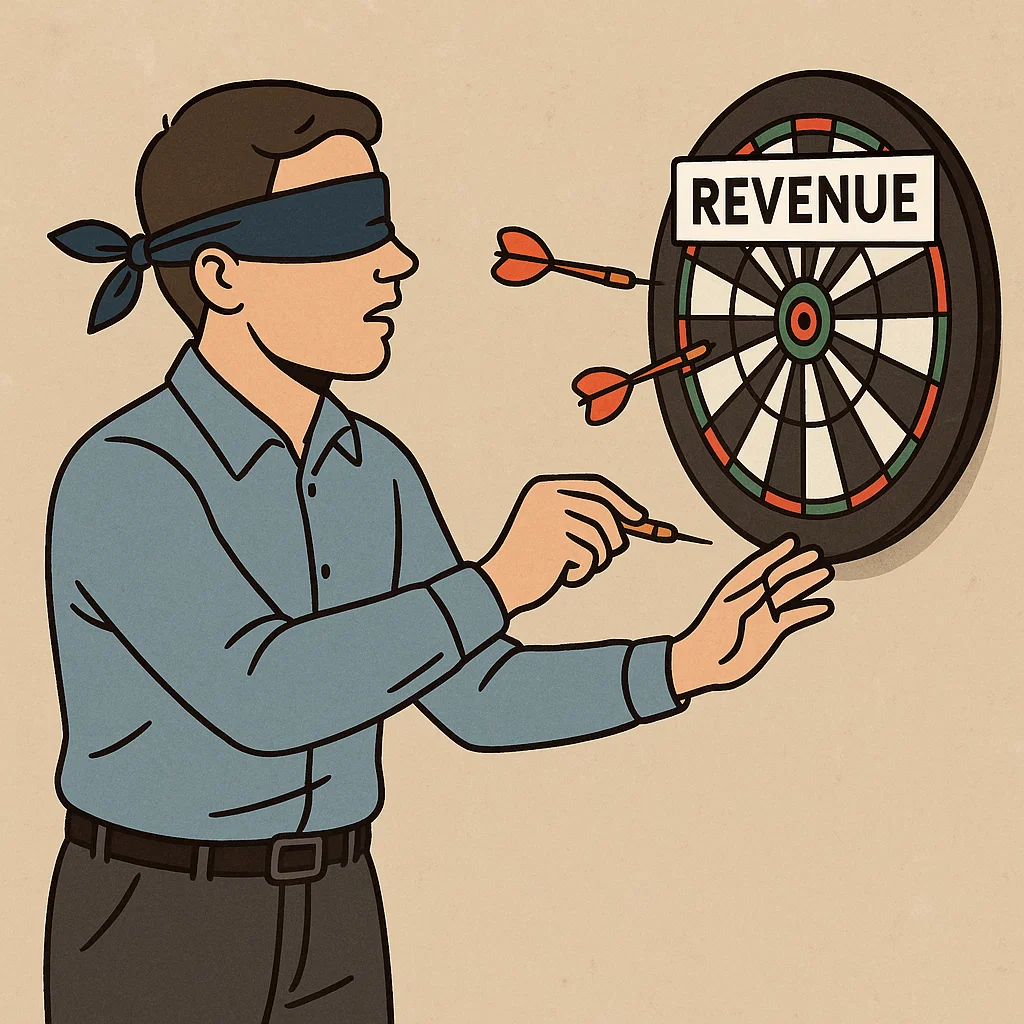
But businesses are not Instagram accounts.
They can’t run sustainably on hope and drama.
A seasoned virtual CFO service provider sells something much less glamorous but far more powerful:
- Boring, repeatable processes
- Clear, data-driven decision rules
- Protection from your own worst impulses
- A financial roadmap that holds even when the world feels noisy
It doesn’t go viral like eclipse threads—but it keeps salaries paid, vendors happy, and your runway intact.
If you still want to watch 17–20 Feb…
Be curious. Watch how markets move. See how people interpret the same candles through different lenses:
- “Technical breakdown”
- “Macro news”
- “Eclipse effect”
But if you’re a founder, CEO, or business owner, ask yourself a better question:
“Is my company’s financial system strong enough that it doesn’t matter what story the market tells this week?”
If the honest answer is “no”, that’s your signal—not to learn a new astro‑trading setup, but to bring in a virtual CFO who will:
- Audit your current financial structure
- Build a clear cash‑flow and risk framework
- Put in place dashboards, SOPs and controls
- Help you grow without gambling your foundation
If you’d like, I can sketch a simple “Financial Risk Map” for your business: where your money sits today, what’s exposed to market noise, and what guardrails we should build so that the next viral prediction is just content—not a threat to your balance sheet.