
If you follow tech news, you have seen the headlines this week. They are impossible to miss:
- “Google Gemini Launch Delayed as Tech Falls Short of Internal Goals”
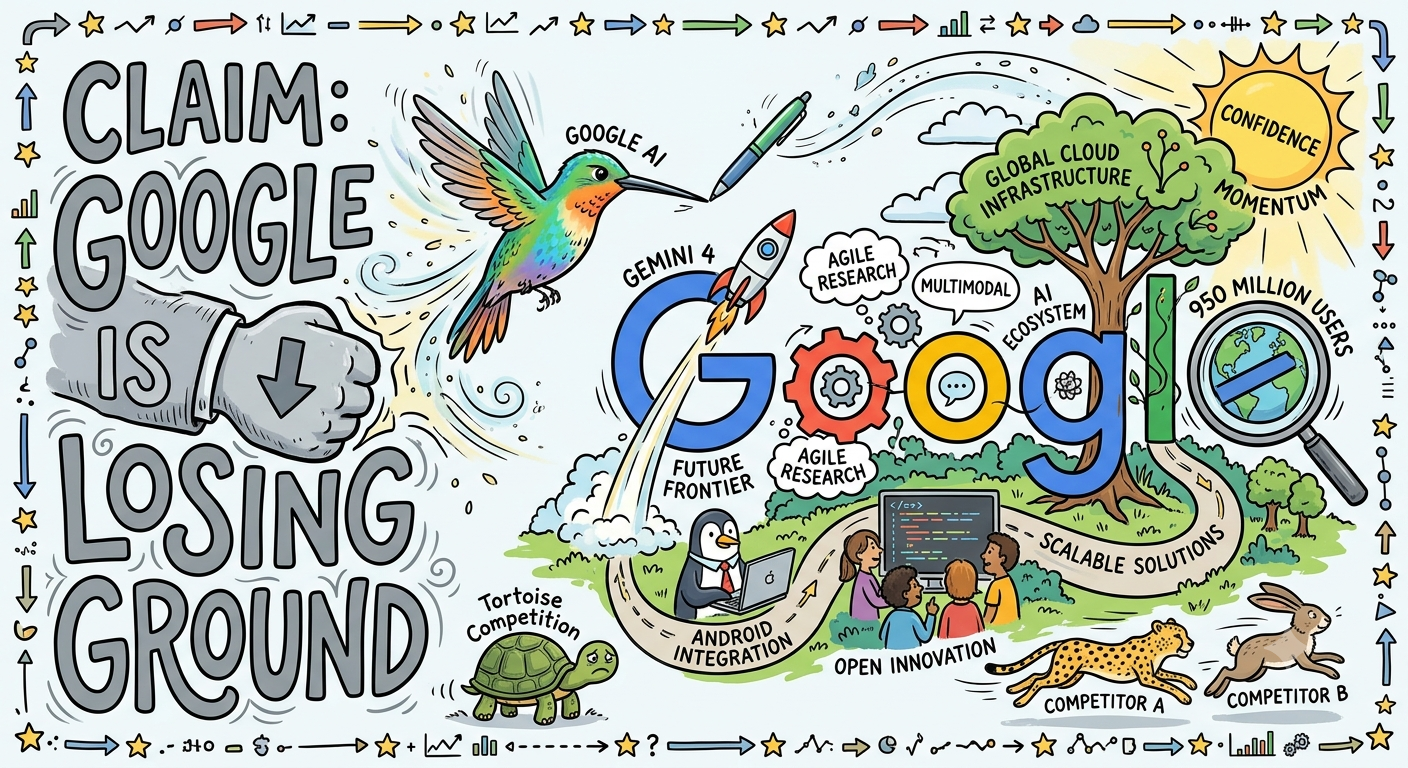
- “Pichai pushes back on claims Google is losing ground in AI race”
- “Google Stock Falls Amid Questions Over AI Leadership”
- “Google’s Gemini delay exposes a deeper problem: morale”
Google released three new AI models this week—Gemini 3.6 Flash, 3.5 Flash-Lite, and a cybersecurity-focused Flash Cyber. But all anyone wants to talk about is the one that did not ship: Gemini 3.5 Pro. The flagship. The crown jewel. The model that was supposed to prove Google still leads the AI race.
It is delayed. It is months behind schedule. And the reason? Coding performance fell short of internal goals.
When I read these headlines, I did not just see a tech story. I saw a business parable. I saw a cash flow warning. And I saw a leadership lesson for every founder, every SME owner, and every finance leader who has ever had to explain to investors why their most important product is late.
Because here is the truth: Your business has a “Gemini 3.5 Pro” too. It is that flagship product you promised. That new service line you announced. That big expansion you hyped at the last board meeting. And how you manage its delay—or its delivery—will determine whether your business sinks or swims.
Let us break down Google’s Gemini saga through the lens of a Virtual CFO.
1. The “Flash” vs. “Pro” Dilemma: Volume vs. Margin
Here is what Google shipped this week:
- Gemini 3.6 Flash: Faster, cheaper, more token-efficient. Consumes 17% fewer output tokens than its predecessor. Priced at just $1.50 per 1 million input tokens and $7.50 per 1 million output tokens.
- Gemini 3.5 Flash-Lite: Their fastest, most cost-effective model yet—delivering 350 output tokens per second.
- Gemini 3.5 Flash Cyber: A specialized model for finding and patching security vulnerabilities at a lower cost than larger models.
These are workhorses. They are volume products. They are low-margin, high-volume plays designed to capture market share, drive adoption, and generate token usage at scale.
And then there is Gemini 3.5 Pro—the flagship. The high-margin, high-prestige product. The one that was supposed to lead.
The Financial Angle:
Every business faces this tension. Do you focus on volume (cheaper, faster, more accessible offerings that generate cash flow and market share)? Or do you focus on premium (the flagship product that commands higher margins but requires more R&D, more time, and more risk)?
Google is doing both. But here is the catch: They are spending like they are a premium company while shipping like they are a volume company.
Alphabet raised its 2026 capital expenditure forecast to between $195 billion and $205 billion. That is $200 billion on AI infrastructure. Finance chief Anat Ashkenazi admitted this would create “modest margin pressure in the near term”. Translation: They are burning cash at an unprecedented rate.
The question every founder must ask themselves: Are you spending like a “Pro” company while delivering like a “Flash” company? Are your fixed costs—your infrastructure, your team, your overhead—aligned with your actual revenue reality, or are you banking on a flagship that has not arrived yet?
2. The “Coding” Problem: When Your Core Competency Fails You
Here is the most damning detail in the Bloomberg report: “Late last month, Google updated the data being used to train Gemini in an attempt to improve these skills, but the results were disappointing.”
Coding is not a nice-to-have for Google. It is the core competency. It is the foundation upon which everything else is built. And yet, the flagship model failed at it.
Sundar Pichai himself admitted on the earnings call: “There are areas where we’ve acknowledged we need to improve and coding and agentic coding is an example of that.”
The Financial Angle:
What is your business’s “coding”? What is the core capability that everything else depends on?
For a manufacturing business, it might be supply chain reliability. For a service firm, it might be talent retention. For a retail business, it might be inventory management.
If your core competency is failing, nothing else matters. You can have the best marketing, the best sales team, the best pricing strategy—but if the foundation is cracked, the whole structure collapses.
Google has been losing top AI researchers to rivals. Gemini co-lead Noam Shazeer went to OpenAI. Nobel laureate John Jumper left for Anthropic. This is not just a technical problem. It is a talent problem. It is a culture problem. It is a leadership problem.
And here is the uncomfortable question for you: Are your best people leaving? Are your core competencies eroding because you are not investing in talent, training, or culture? Because if they are, your “flagship” will be delayed too—and your investors will notice.
3. The Pentagon Deal: Ethical Costs and Brand Risk
One of the most controversial elements of Google’s Gemini story is the April deal with the Pentagon—now renamed the Department of War—that allows the military to run Google’s Gemini model on classified systems.
Multiple employees have resigned over this deal. It comes up often in exit interviews. One former DeepMind scientist called it a “constant battle” that has led to “emotional burnout”.
The Financial Angle:
This is not just an ethical issue. It is a financial risk.
- Talent attrition: Losing your best people costs money. Recruitment, training, institutional knowledge—all of it walks out the door.
- Brand damage: When your customers, partners, or employees question your values, your trust capital erodes. And trust capital is expensive to rebuild.
- Regulatory risk: Google is already facing a lawsuit from U.S. publishers alleging copyright infringement in training Gemini. More lawsuits mean more legal fees, more distractions, and more reputational damage.
Every business faces ethical trade-offs. The question is not whether you will face them. The question is: Are you pricing the risk correctly?
When you take a contract that pushes your ethical boundaries, are you factoring in the cost of talent loss? The cost of brand damage? The cost of regulatory scrutiny? Or are you just looking at the top-line revenue and calling it a win?
Because Google is learning—the hard way—that not all revenue is good revenue.

4. The Monthly Cadence: When “Soon” Is Not a Strategy
Pichai disclosed on the earnings call that Gemini 4’s roadmap includes rolling out models “almost at a monthly cadence”. He also said: “For the next generation of frontier, you’re going to need a much larger base model. We are now training Gemini 4 and we are being very ambitious with it.”
But here is the problem: Gemini 3.5 Pro was supposed to ship in June. It is now late July. And the company’s response is: “We’re currently testing with partners and plan to make it broadly available as soon as it’s ready.”
“Soon” is not a strategy. “Soon” is what you say when you do not have a credible timeline. “Soon” is what you say when you are buying time.
The Financial Angle:
How many times have you told a client, an investor, or a board member that something is coming “soon”? How many times have you delayed a product launch, a financial report, or a strategic pivot?
Delays have a cost.
- Opportunity cost: While you are delayed, your competitors are moving. Anthropic released Mythos and Fable. OpenAI launched GPT-5.6. Meta released a model that crept ahead of Gemini’s capabilities.
- Trust cost: Every delay erodes confidence. Investors ask harder questions. Clients look elsewhere. Employees lose morale.
- Cash cost: While you are “testing with partners,” your burn rate continues. Your fixed costs do not pause. Your payroll does not stop.
Google’s stock fell nearly 5% after the earnings call. Investors are not impressed by “soon.” They want delivery.
The lesson for your business is simple: Under-promise and over-deliver. Do not announce a flagship until it is ready. Do not set a timeline you cannot keep. And if you must delay—be transparent, be specific, and show a credible path forward.
5. The $200 Billion Question: Are You Investing or Gambling?
Alphabet is spending $195 billion to $205 billion on AI infrastructure this year. Cloud revenue grew 82% year over year to $24.8 billion. But free cash flow turned negative largely due to AI spending.
This is a massive bet. It is a bet that the infrastructure spend will pay off in the long term. It is a bet that the “Flash” models will generate enough volume to justify the capex. It is a bet that Gemini 4 will eventually reclaim the frontier.
But here is the distinction that every business owner must understand: There is a difference between investing and gambling.
- Investing is when you have a clear thesis, a credible path to ROI, and the discipline to pivot if the thesis fails.
- Gambling is when you are throwing money at a problem because you are afraid of being left behind.
Google is doing both. The “Flash” models are a clear investment—they are generating revenue, driving adoption, and solving real customer problems. The Gemini 3.5 Pro delay? That is starting to look like a gamble.
The Financial Angle:
Where are you investing vs. gambling?
- Are you spending on marketing that has a clear ROI, or are you spending because your competitors are?
- Are you hiring because you have a clear need, or because you are afraid of missing out on talent?
- Are you expanding because the data supports it, or because it feels like the right thing to do?
The Gemini saga is a reminder that even the biggest companies can confuse investment with gambling. And when you gamble with your business’s cash flow, the house always wins—eventually.
The Final Verdict
Google’s Gemini story is not just a tech story. It is a business story with lessons for every founder, every SME owner, and every finance leader.
- Volume vs. Premium: Are you spending like a premium company while delivering like a volume company? Align your costs with your revenue reality.
- Core Competency: Is your foundation cracking? Invest in your core capabilities before everything else collapses.
- Ethical Risk: Are you pricing the cost of talent loss, brand damage, and regulatory scrutiny into your decisions?
- Delays Have a Cost: “Soon” is not a strategy. Be transparent, be specific, and deliver on your promises.
- Investing vs. Gambling: Know the difference. Have a thesis. Have a path to ROI. And have the discipline to pivot.
Google can afford to be overtaken on a leaderboard. It cannot afford to lose its best people—or its investors’ patience.
Neither can you.
At 21Degrees, we do not just look at your numbers. We look at your strategy. Your core competencies. Your risks. Your opportunities. We help you distinguish between investing and gambling—and we give you the data to make the right call.
Whether you are preparing to launch your own “flagship” or managing the fallout of a delayed one, let us sit down and build a financial strategy that delivers—not “soon,” but now.
Drop a comment below or reach out. Let us make sure your business does not become a cautionary tale.